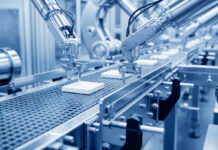
In the realm of prototyping, 3D printing has long been a game-changer, providing swift and cost-effective solutions for product development. However, its role has expanded far beyond mere prototyping. Today, additive manufacturing stands as a driving force behind the transformation of entire industries. The ability to fabricate complex structures layer by layer has unlocked new possibilities, prompting companies to rethink traditional manufacturing approaches.
- Swift and Cost-effective Prototyping: 3D printing allows for the rapid creation of prototypes, enabling designers and engineers to quickly iterate and test concepts. This reduces the time and costs associated with traditional prototyping methods.
- Transformation of Industries: The impact of 3D printing goes beyond prototyping; it has led to a paradigm shift in manufacturing. Companies are exploring innovative ways to use additive manufacturing throughout the entire production process.
- Complex Structure Fabrication: The layer-by-layer approach of 3D printing enables the fabrication of intricate and complex structures that would be challenging or impossible with traditional methods. This capability has spurred innovation in design and manufacturing.
Customization Unleashed:
3D printing empowers manufacturers to create highly customized components tailored to precise specifications. This level of customization leads to increased product innovation and customer satisfaction.
- Tailored Components: Additive manufacturing allows for the production of components designed to meet specific requirements. This level of customization is particularly valuable in industries where products need to fit unique specifications.
- Product Innovation: The ability to create highly customized parts fosters innovation. Manufacturers can design products with features that were previously impractical or impossible, leading to the development of new and improved products.
- Enhanced Customer Satisfaction: Customization means that products can better meet individual customer needs. This can lead to higher levels of customer satisfaction as consumers receive products that align more closely with their preferences and requirements.
Reducing Time-to-Market:
Rapid prototyping accelerates product development cycles, enabling companies to bring new ideas to market faster. Shortened time-to-market is a critical advantage in today’s fast-paced business landscape.
- Accelerated Product Development: 3D printing’s rapid prototyping capabilities significantly shorten the time required to develop and test new products. This agility is crucial in industries where being the first to market can confer a competitive advantage.
- Competitive Edge: In fast-paced markets, getting products to market quickly can be a decisive factor in gaining a competitive edge. Shortened time-to-market allows companies to respond more swiftly to changing consumer demands and market trends.
3D Printing Applications Across Industries:
The versatility of additive manufacturing extends its influence across diverse sectors, demonstrating its adaptability to varying production needs.
Medical Marvels:
In the healthcare industry, 3D printing has become instrumental in producing patient-specific implants and prosthetics. Custom-fit medical devices improve patient outcomes and pave the way for personalized healthcare solutions.
- Patient-specific Implants: 3D printing enables the creation of implants tailored to an individual patient’s anatomy, improving the fit and functionality of medical devices.
- Prosthetics: Customized prosthetics can be manufactured to precisely match the unique requirements of each patient, enhancing comfort and functionality.
- Personalized Healthcare: The ability to create patient-specific solutions contributes to the trend of personalized medicine, where treatments are tailored to individual patients for better outcomes.
Aerospace Advancements:
Aerospace manufacturers leverage 3D printing to craft lightweight and intricate components, reducing overall aircraft weight. The technology’s role in creating complex geometries enhances fuel efficiency and overall performance.
- Lightweight Components: 3D printing allows for the production of lightweight yet strong components, reducing the overall weight of aircraft. This is critical for fuel efficiency and overall performance.
- Complex Geometries: The layer-by-layer approach of 3D printing enables the fabrication of intricate and complex shapes that might be challenging or impossible with traditional manufacturing. This enhances the aerodynamics and efficiency of aerospace components.
Automotive Innovations:
Automotive companies embrace additive manufacturing for prototyping and producing lightweight parts, enhancing vehicle efficiency. Customized interiors and personalized accessories are made possible through 3D printing, offering a unique customer experience.
- Prototyping: 3D printing is widely used in the automotive industry for rapid prototyping, allowing designers to quickly iterate and test new concepts.
- Lightweight Parts: Similar to aerospace, additive manufacturing is employed to produce lightweight components in vehicles, contributing to fuel efficiency and overall performance.
- Customization: The ability to 3D print customized interiors and accessories allows automotive companies to offer unique and personalized features to customers, contributing to a more tailored and appealing driving experience.
Challenges and Future Outlook of 3D Printing:
While additive manufacturing has undoubtedly transformed the manufacturing landscape, challenges persist.
Material Limitations:
Current material limitations can hinder the production of certain high-stress or high-temperature components. Ongoing research and development are crucial for expanding the range of materials compatible with 3D printing.
- Material Challenges: Some applications, particularly those in high-stress or high-temperature environments, may face limitations due to the current range of materials compatible with 3D printing. Ongoing research aims to expand the material options to overcome these limitations.
Scalability Concerns:
Scaling up production using 3D printing can pose challenges in terms of speed and cost-effectiveness. Industry collaboration and advancements in large-scale 3D printing technologies are key to addressing scalability concerns.
- Speed and Cost Challenges: While this method excels in prototyping and small-scale production, scaling up to large volumes can be challenging due to speed and cost considerations. Collaborative efforts and advancements in large-scale 3D printing technologies are essential to overcoming these challenges.
In conclusion, additive manufacturing has evolved from a niche technology to a cornerstone of innovation in the manufacturing sector. As a manufacturing executive, staying abreast of these developments is paramount for strategic decision-making. Embracing the transformative power of 3D printing can unlock new possibilities, redefine production processes, and position your company at the forefront of technological advancement.